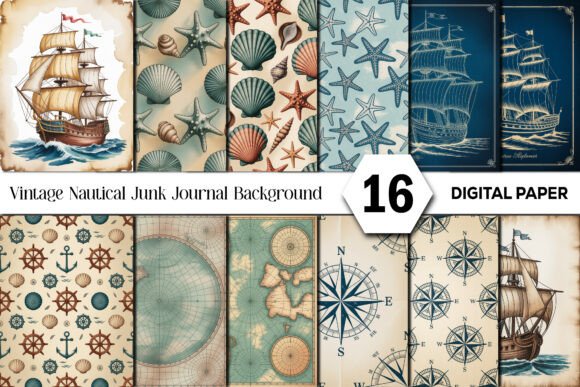
Vintage Nautical Junk Journal Background: Timeless Oceanic Charm
There’s a distinct romance attached to the sea—the whisper of old maps, the weight of a brass compass, the weathered texture of a ship’s hull. Capturing that feeling in a digital project requires more than just a generic image; it demands a curated collection of textures and motifs that tell a story. The Vintage Nautical Junk Journal Background collection is exactly that: a sophisticated set of 16 digital papers designed to evoke the golden age of maritime exploration. Unlike standard stock photos, these backgrounds are crafted with the specific needs of designers, scrapbookers, and content creators in mind, offering a seamless bridge between antique aesthetics and modern digital utility.
The Visual Language of the Collection
At its core, this collection is defined by its textural depth and thematic cohesion. You aren’t just getting flat images; you are acquiring design assets that carry the personality of aged parchment and coastal artifacts. The visual language speaks to a style that is rugged yet elegant. You will find intricate illustrations of sailing ships cutting through stylized waves, alongside delicate sketches of seashells and starfish that feel lifted from a naturalist’s journal.
The color palette leans heavily into earthy, muted tones—sepia, faded indigo, and weathered parchment white—which ensures that the backgrounds don’t overpower the foreground content. This is crucial for editorial design and packaging design, where the background must support the message without competing for attention. The inclusion of compass roses and anchors provides strong geometric focal points, while the antique map textures offer a complex, organic grain that adds instant credibility to any project. It is this blend of organic decay and structured illustration that makes the collection so versatile.
Strategic Applications for Modern Creators
While the name suggests a focus on junk journaling, the utility of these papers extends far into professional brand identity and marketing. For a small business owner running a seaside café, a diving school, or a boutique travel agency, these textures can form the backbone of a visual identity that feels authentic and grounded. Using these backgrounds in social media graphics creates an immediate emotional connection with an audience that values tradition and adventure.
For digital entrepreneurs and POD (Print on Demand) designers, the commercial license is a significant asset. Imagine these textures applied to:
- Invitations and Stationery: Creating wedding suites for beach ceremonies or corporate events with a maritime theme.
- Book Covers: Designing covers for historical fiction, memoirs, or travel guides where the setting is a character in itself.
- Website Design: Using the subtle map textures as a full-bleed background for a landing page, paired with clean sans serif fonts to ensure readability.
- Scrapbooking: Preserving vacation memories with a backdrop that matches the atmosphere of the coast.
The 8.5x11 inch format at 300 DPI makes these files print-ready, eliminating the guesswork often associated with resolution scaling. Whether you are printing a high-quality art print or a digital planner page, the integrity of the image remains intact.
Enhancing Brand Perception and Engagement
In a digital landscape saturated with sleek, minimal, and often sterile aesthetics, the Vintage Nautical Junk Journal Background offers a tactile alternative. Using these textures signals a brand that values heritage, durability, and storytelling. This is particularly effective for modern typography projects where you might pair a bold, contemporary display font with a weathered background. The contrast creates a dynamic visual hierarchy that draws the eye and holds attention.
Consider the psychological impact on your audience. A background that mimics the texture of an old sea chart suggests that the content or product has depth and history. It moves a brand away from feeling "factory-made" to feeling "curated." For bloggers and content creators, this translates to higher engagement rates; readers are more likely to stay on a page that feels immersive and aesthetically rich.
Practical Integration and Font Pairing
Integrating these backgrounds effectively requires a thoughtful approach to font pairing. Because the backgrounds are detailed and textured, the typography used on top of them must be highly legible. Avoid overly complex script fonts or handwritten fonts for body copy, as they can get lost in the visual noise of the map textures.
Instead, consider the following strategies:
- Use Strong Serifs for Headers: A classic serif font with high contrast works beautifully to complement the vintage vibe. It feels authoritative and timeless, mirroring the style of the background.
- Clean Sans Serif for Body Text: To ensure readability, overlay your main text using a clean sans serif font. This modern touch prevents the design from looking too dated and ensures the information is accessible.
- Opacity and Overlays: If you need to place a large block of text over a busy section of the background, consider using a semi-transparent shape or a "knockout" box. This creates a quiet zone for your text while allowing the nautical texture to frame the edges.
When evaluating the fit for your project, print a test page or view it at 100% zoom on your screen. Check that the specific elements of the background (like a compass rose) don't awkwardly intersect with your logo or main headline. The goal is cohesion, not competition.
Maximizing Your Asset Library
Treat this collection not just as a set of images, but as a toolkit for establishing mood. The versatility of the Vintage Nautical Junk Journal Background allows it to serve as a unifying element across different platforms. You can use the anchor pattern for your Instagram story highlights, the parchment texture for your email newsletter header, and the map graphic for a downloadable PDF lead magnet. By maintaining this visual consistency, you build a recognizable brand identity that feels professional and intentional.
Ultimately, the value of these digital papers lies in their ability to transport the viewer. In a world of flat digital screens, adding a layer of vintage maritime history creates a sensory experience that generic graphics simply cannot match. It is a practical, high-quality solution for anyone looking to inject a sense of timeless oceanic charm into their creative work.